Moving Through Life
Moving Through Life offers:
Counseling
Dance/Movement Therapy
to help people move through life’s ups and downs.
We also offer
Hypnotherapy
EMDR.
Counseling
Mental Health Counseling helps people work through normal challenges as well as with diagnosis and treatment of disorders. Everyone can benefit from support from time to time. Having an unbiased person who you can walk through those challenges with you gives you support and a broader perspective.

Dance/Movement Therapy
Dance/movement therapy uses body language and creative expression to build connection, awareness and healing.
This modality is effective, in part, because:
Communication is 90% nonverbal.
Everyone moves in some way.
Putting things into words is sometimes difficult.
Emotions and struggles have a physical component.


Why choose Dance / Movement Therapy?
Moving can help you find your strength
Moving can release emotions and help integrate experiences
Body language gives insight into what’s going on with each person
The creativity of the dance gives structure to experiences and feelings
Dancing and moving can help access to and build an understanding of thoughts and emotions

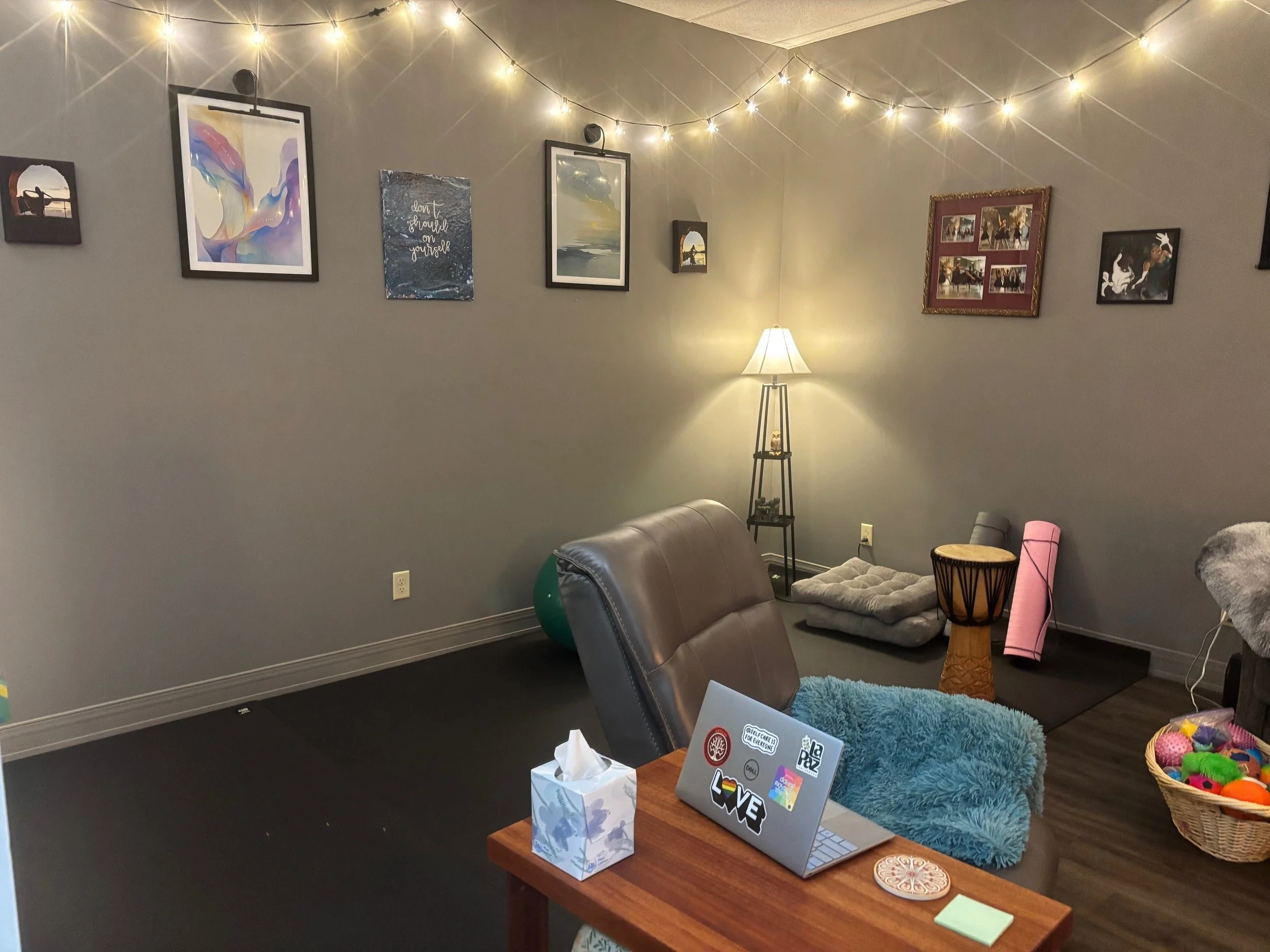
In a session, I frequently ask what you notice in your body to build your connection to your body and enable you to connect with emotions. If we agree to do movement, it could be as small as monitoring breathing or as big as running across the floor. Frequently, I will ask people to experiment with concepts like pull, push, press, flick, and float, which can bring awareness to what is helpful and what is difficult, both in movement and emotionally.
Half of the office has a mat to use for movement. It’s a small space to allow for movement without being intimidating.
Hypnotherapy
Hypnosis is a state of increased focus or trance. “Trance” may sound like a scary word, but we go into trance naturally in day-to-day life, for example, getting in the zone while working. Hypnotherapy utilizes this state to help change beliefs, thoughts, and emotions. In trance, emotional brain is more able to receive positive information without cognitive brain negating it. Changing beliefs, thoughts, and emotions is part of processing traumatic memories and helping change the way the memory is stored.
In a hypnotherapy session, I will ask you what you want to believe, think, and feel, as well as what you find soothing, such as the mountains or the beach. I will use your words as hypnotic suggestions. Most people feel more relaxed and peaceful after a hypnosis experience.
For more information, click the link below.

EMDR
EMDR is known for being effective for trauma treatment. Eye movement similar to those you experience in REM sleep, can help change the way traumatic memories are stored. As in hypnotherapy, changing beliefs, thoughts, and emotions is a key part of processing memories.
In an EMDR session, I will ask you about beliefs associated with the traumatic events and beliefs you would rather have. Then I will ask you to watch me move my fingers back and forth for a bit. I will frequently stop and ask what you are noticing. Your job is to report whatever is going on in your thoughts and feelings.
For more information, click the link below.